
Assessing the Quality of Teaching Through the Teacher's Key Competence Balance Circle



Abstract
This study introduces the Teacher's Key Competence Balance Circle (TKCBC), a framework designed to evaluate teaching quality through eight key teacher competences, with particular emphasis on the newly conceptualized digital and cultural competence. Utilizing a mixed-methods approach, which integrates direct interviews with a balancing circle assessment, the research aims to establish a comprehensive standard for evaluating teachers' effectiveness in critical areas: Key Competence for Learning, Key Communication Competence, Key Personal and Social Competence, Key Competence for Citizenship and Sustainability, Key Competence for Entrepreneurship and Work, Key Competence for Problem Solving, Key Cultural Competence, and Key Digital Competence. The findings highlight the imperative to transition from a rigid, prescriptive teaching model to a more dynamic and adaptive approach. This transition is essential for meeting the complex and evolving demands of contemporary education, particularly in the realms of digital and cultural competence. The study argues that enhancing educational quality requires a focus beyond traditional evaluative metrics, advocating for the development of a supportive, innovative pedagogical environment that fosters continuous professional growth (lifelong learning) and reflective practice. The TKCBC framework not only provides a robust tool for assessing teaching effectiveness but also underscores the critical importance of integrating digital and cultural competencies, aligning with the evolving needs of students and the broader educational landscape.
Keywords: Teacher competence assessmentpedagogical strategieseducational qualityprofessional adaptabilityTKCBC framework
Introduction
Background
The educational landscape has undergone significant transformations over the past few decades, driven by rapid technological advancements, globalization, and evolving societal values. These changes have led to a growing recognition of the need to re-evaluate the skills and competencies required of teachers to effectively prepare students for the complexities of modern life (Chen & Yang, 2021). Traditional models of teaching and teacher evaluation, which often emphasize rigid and prescriptive approaches, are increasingly seen as inadequate for addressing the dynamic and multifaceted demands of contemporary education (Zhao, 2020). The Czech Ministry of Education, Youth, and Sports (MSMT), in collaboration with the Czech School Inspectorate (CSI), has recently introduced the Quality School Model. A key prerequisite for the effective implementation of this model is the continuous monitoring and evaluation of the quality of education provided by schools. This requirement is reinforced by the Education Act, which mandates the inclusion of self-evaluation mechanisms within schools (Glickman et al., 2014). The Quality School model outlines six fundamental areas that define the quality of a school as an institution and the quality of the education it delivers: the school's concept and framework, pedagogical leadership, quality of the teaching staff, instruction, educational outcomes, and support for students in the learning process. According to MSMT and CSI, the core of a quality school is its educators. Quality educators are described as those who are qualified, professionally competent, respectful towards students, approachable, and demonstrate professional conduct. They are also expected to foster the development of student responsibility, be aware of their own responsibilities, remain open to the exchange of experiences, collaborate constructively with colleagues, and continuously develop their own education, knowledge, and skills (Czech School Inspectorate – Evaluation Criteria, 2024). In light of above-mentioned considerations, this research focuses on the key competencies of teachers and explores the use of the balance circle as a tool for evaluating the quality of teachers' work. By examining these competencies, the study aims to contribute to the broader understanding of effective teaching practices and the continuous improvement of educational quality within the framework of the Quality School model.
Purpose of the Study
In response to these challenges, the study introduces the Teacher's Key Competence Balance Circle (TKCBC), a comprehensive framework designed to assess teaching quality through eight key teacher competencies. The TKCBC framework places particular emphasis on the newly conceptualized digital and cultural competencies, recognizing their critical importance in today's educational environment (Redecker, 2020). By providing a more holistic and nuanced assessment of teaching effectiveness, the TKCBC framework aims to bridge the gap between traditional evaluation methods and the diverse needs of modern education.
Significance of the Study
This study addresses the limitations of traditional teacher evaluation models, which often focus narrowly on content knowledge and instructional strategies while neglecting broader competencies essential for effective teaching (Schleicher, 2020). By emphasizing the integration of digital and cultural competencies into the evaluation process, the TKCBC framework aligns with the evolving needs of students and the broader educational landscape. The findings of this study underscore the need for a shift from rigid, prescriptive teaching models to more dynamic and adaptive approaches that support continuous professional growth and reflective practice (Shah & Rahman, 2021)
Theoretical Framework
Evolution of Teacher Competence Models
Historically, teacher competence models have focused primarily on a limited set of skills, including content knowledge, classroom management, and instructional strategies (Van Driel & Berry, 2012). These models were often based on a one-size-fits-all approach to teaching, with little consideration for the diverse and complex challenges faced by teachers in different educational contexts. However, as the demands of education have evolved, so too has the understanding of what constitutes effective teaching (OECD, 2005, 2021).
In the 21 st century, there has been a growing recognition of the need for teachers to possess a broader set of competencies that go beyond traditional cognitive and instructional skills. This includes digital literacy, cultural awareness, and the ability to foster students' personal and social development (Paniagua & Istance, 2021). The TKCBC framework was developed in response to this shift, offering a more comprehensive approach to evaluating teacher effectiveness by incorporating a wider range of competencies.
Development of the TKCBC Framework
The TKCBC framework was created to address the limitations of traditional teacher competence models and to provide a more holistic assessment of teaching quality. The framework is based on the premise that effective teaching requires a balance of competencies across multiple domains, each of which is critical for meeting the diverse needs of students and the broader educational community (European Commission, 2018, 2022). The eight key competencies included in the TKCBC framework are as follows:
Key Competence for Learning
This competence encompasses a teacher's ability to facilitate student learning through effective instructional strategies, curriculum design, and assessment practices (Hattie, 2009). It includes the capacity to engage students in meaningful learning experiences and to adapt teaching methods to meet the needs of diverse learners (Winthrop & McGivney, 2020).
Key Communication Competence
Effective communication is essential for successful teaching. This competence includes a teacher's ability to communicate clearly and effectively with students, colleagues, and parents. It also involves the ability to foster open and respectful dialogue in the classroom and to use communication as a tool for building positive relationships with students (Colley, 2021).
Key Personal and Social Competence
This competence refers to a teacher's ability to manage their own emotions, maintain a positive attitude, and build strong interpersonal relationships with students and colleagues. It also includes the capacity to create a supportive and inclusive classroom environment that promotes student well-being and social development (Mahfouz, 2021).
Key Competence for Citizenship and Sustainability
In an increasingly globalized world, teachers must be able to prepare students to become responsible citizens who are aware of and engaged with issues of social justice, environmental sustainability, and global interdependence (Arslan & Demirtaş, 2021). This competence includes a teacher's ability to integrate these themes into their teaching and to inspire students to take action on issues that matter to them (UNESCO, 2021).
Key Competence for Entrepreneurship and Work
This competence involves a teacher's ability to prepare students for the workforce by fostering entrepreneurial thinking, creativity, and problem-solving skills (OECD, 2022). It also includes the capacity to help students develop the skills and attitudes necessary for success in a rapidly changing labour market (Doyle, 2021).
Key Competence for Problem Solving
Problem-solving is a critical skill for both teachers and students. This competence includes a teacher's ability to identify and address challenges in the classroom, as well as to guide students in developing their own problem-solving skills (Ellis & Goodyear, 2021). It also involves the capacity to adapt to new situations and to find innovative solutions to complex problems.
Key Cultural Competence
In an increasingly diverse and multicultural world, cultural competence is essential for effective teaching. This competence includes a teacher's ability to understand and respect cultural differences, to create an inclusive classroom environment, and to integrate diverse perspectives into their teaching (Banks, 2021). It also involves the capacity to address issues of bias, discrimination, and equity in the classroom (Nieto, 2021).
Key Digital Competence
As technology continues to transform education, digital competence has become a critical skill for teachers. This competence includes a teacher's ability to effectively use digital tools and resources to enhance teaching and learning, as well as to help students develop their own digital literacy skills (Kampylis, 2021). It also involves the capacity to critically evaluate digital content and to use technology in a way that supports student learning and engagement (OECD, 2021). Cultural and digital key competencies have been newly integrated into the revised educational programs in the Czech Republic. It is anticipated that the development of these competencies will require collaboration with faculties of education and other stakeholders involved in the training of educational professionals (Voogt et al., 2013). This collaboration is essential for the preparation of newly designed educational programs, not only for novice teachers but also for those who are already practicing.
Methodology
Research Design
This study employs a mixed-methods approach, combining qualitative and quantitative data collection methods to comprehensively analyse teacher competence. The research design includes direct interviews with teachers, as well as the implementation of the TKCBC framework through a balancing circle assessment. This approach allows for a detailed exploration of teachers' competencies across the eight key domains and an examination of how these competencies interact to influence overall teaching effectiveness.
Participants
The study involved 115 senior-level basic school teachers, each with a minimum of 1 to 16+ years of teaching experience, instructing pupils aged 10 to 15. The sample comprised 75 female and 40 male educators, carefully selected based on their willingness to participate and their ability to provide valuable insights into their teaching practices and competencies.
Data Collection Methods
Direct Interviews
The first phase of data collection involved conducting direct interviews with participants. These interviews were designed to explore participants' experiences, challenges, and perceptions related to the eight key competencies outlined in the TKCBC framework. The interviews were semi-structured, allowing for flexibility in the discussion while ensuring that key topics were covered. The interviews were transcribed and analysed using thematic analysis to identify key themes and patterns related to teacher competence (Braun & Clarke, 2022).
TKCBC Framework Assessment
In the second phase of data collection, participants were assessed using the TKCBC framework. This assessment involved a balancing circle exercise, in which teachers were asked to evaluate their competence levels across the eight key domains. The balancing circle exercise is a visual tool that allows participants to plot their self-assessed competence levels on a circular diagram, providing a clear overview of their strengths and areas for improvement. The results of the balancing circle assessment were analysed using descriptive and inferential statistics to identify trends and relationships between the different competencies (Field, 2021).
Results
Findings from Interviews
The qualitative data from the interviews provided valuable insights into teachers' perceptions of the key competencies required for effective teaching. Participants consistently highlighted the importance of balancing traditional competencies with newer demands such as digital and cultural competencies. Below is a summary of key themes that emerged from the interviews:
Key Competence for Learning
Participants emphasized the importance of engaging students through innovative teaching methods. Many teachers expressed the need for professional development to keep pace with new pedagogical strategies, particularly in integrating technology into the classroom.
Key Communication Competence
Effective communication was identified as a crucial competence for creating a positive learning environment. Teachers noted that clear communication with students and parents is essential, particularly in diverse classrooms where language barriers may exist.
Key Personal and Social Competence
Teachers highlighted the importance of emotional intelligence and interpersonal skills in managing classroom dynamics. This competence was seen as foundational for creating an inclusive and supportive classroom environment.
Emphasis on Digital and Cultural Competence
A recurring theme was the growing importance of digital and cultural competencies. Teachers expressed a need for more training and resources to develop these skills, especially in light of the increasing use of technology in education and the diversity of student populations.
TKCBC Framework Assessment Results
The quantitative data collected through the TKCBC framework assessment provided a comprehensive overview of teachers' self-assessed competence levels across the eight key domains. The results are presented below in tables and graphs, followed by detailed explanations.
Overall Competence Scores
Table 1 below presents the average self-assessed scores for each of the eight key competencies. The scores range from 1 (lowest) to 5 (highest).
Competence Distribution: Balancing Circle Visualization
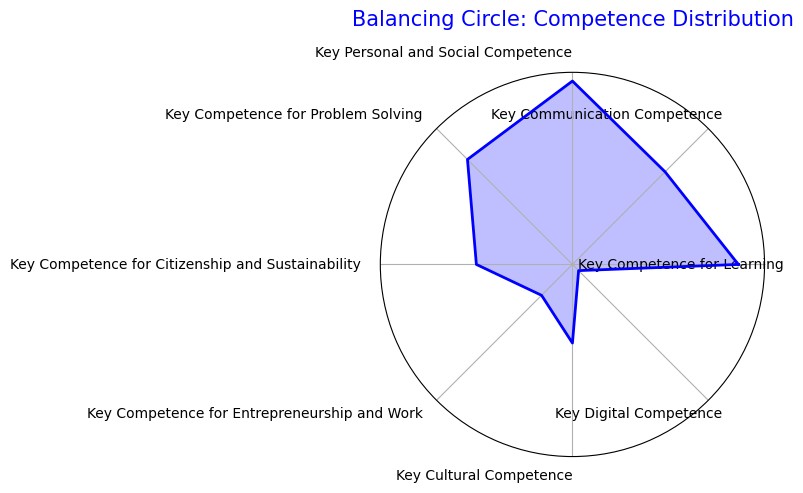
To further analyse the distribution of competencies, the balancing circle visualization was used. Figure 1 presents an example of a balancing circle for a typical teacher in the study. The balancing circle, often referred to as a radar chart or spider chart, is a visual tool used to display multiple quantitative variables in a single chart, with each variable represented as an axis extending from a central point. In the context of the Teacher's Key Competence Balance Circle (TKCBC), the balancing circle illustrates how well a teacher self-assesses in each of the eight key competencies.
Structure of the Balancing Circle — Axes: The chart consists of multiple axes radiating from a central point, each representing one of the key competencies. In the TKCBC framework, there are eight axes, one for each competency. Scale: Each axis is divided into intervals (from 1 to 5), representing different levels of competence. The outermost points of the axes represent the highest level of competence. Data Points: For each key competence, the teacher's self-assessed score is plotted on the corresponding axis. Lines Connecting Data Points: Data points are connected by lines to form a shape that reflects the distribution of competencies. The resulting shape helps visualize strengths and areas for improvement. Center Point: The central point represents the lowest possible score, and the outer boundary represents the highest possible score.
The balancing circle is useful for Identifying Strengths and Weaknesses: Teachers and administrators can quickly see which competencies are strong and which are weaker. Guiding Professional Development: By visualizing the competencies where a teacher scores lower, targeted professional development can be planned. Reflective Practice: Teachers can use the balancing circle to reflect on their self-assessment and set goals for improvement.
The balancing circle visually represents the teacher's self-assessment across the eight competencies. The circular graph illustrates uneven distribution, with strengths in “Key Competence for Learning” and “Key Personal and Social Competence,” and weaknesses in “Key Digital Competence” and “Key Competence for Entrepreneurship and Work.” The gaps in the circle highlight areas where targeted professional development could be most beneficial.
Competence Correlation Analysis
Table 2 presents the correlation matrix of the eight competencies, highlighting the relationships between them.
Moderate correlations suggest that competencies are somewhat interrelated, reinforcing the need for a balanced approach to teacher development. Weaker correlations with "Key Digital Competence" indicate that this area is somewhat isolated from traditional competencies, suggesting the need for more integrative approaches in teacher training.
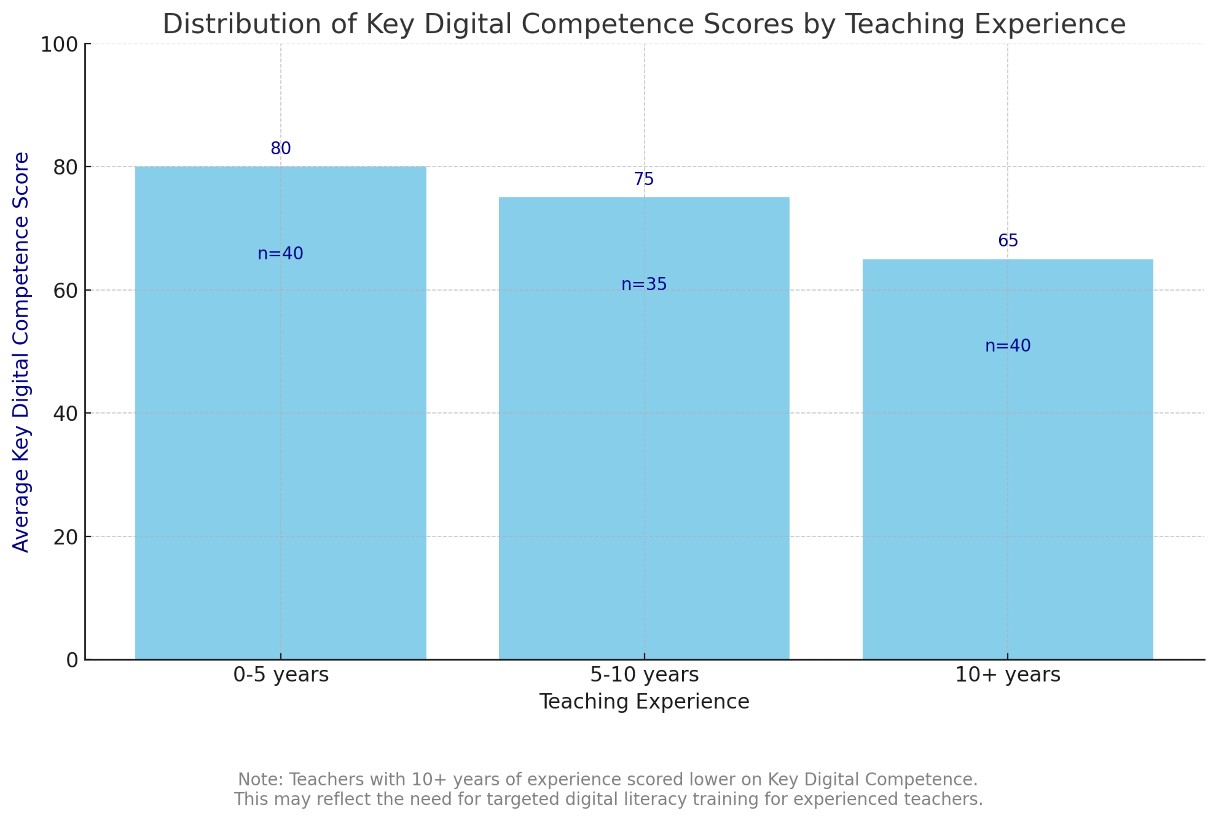
Competence Distribution by Demographics Figure 2. Distribution of Key Digital Competence scores by teaching experience The data suggest the need for targeted digital literacy training for experienced teachers .
To explore potential demographic influences on competence distribution, the data were further analysed based on age, teaching experience, and educational level. Figure 2 below presents the distribution of Key Digital Competence scores by teaching experience. Note: Teachers with 10+ years of experience scored lower on Key Digital Competence compared to those with less experience. Newer teachers may be more familiar with digital tools, possibly due to more recent training.
Figure 3 below shows the distribution of Key Cultural Competence Scores by Teaching Experience.
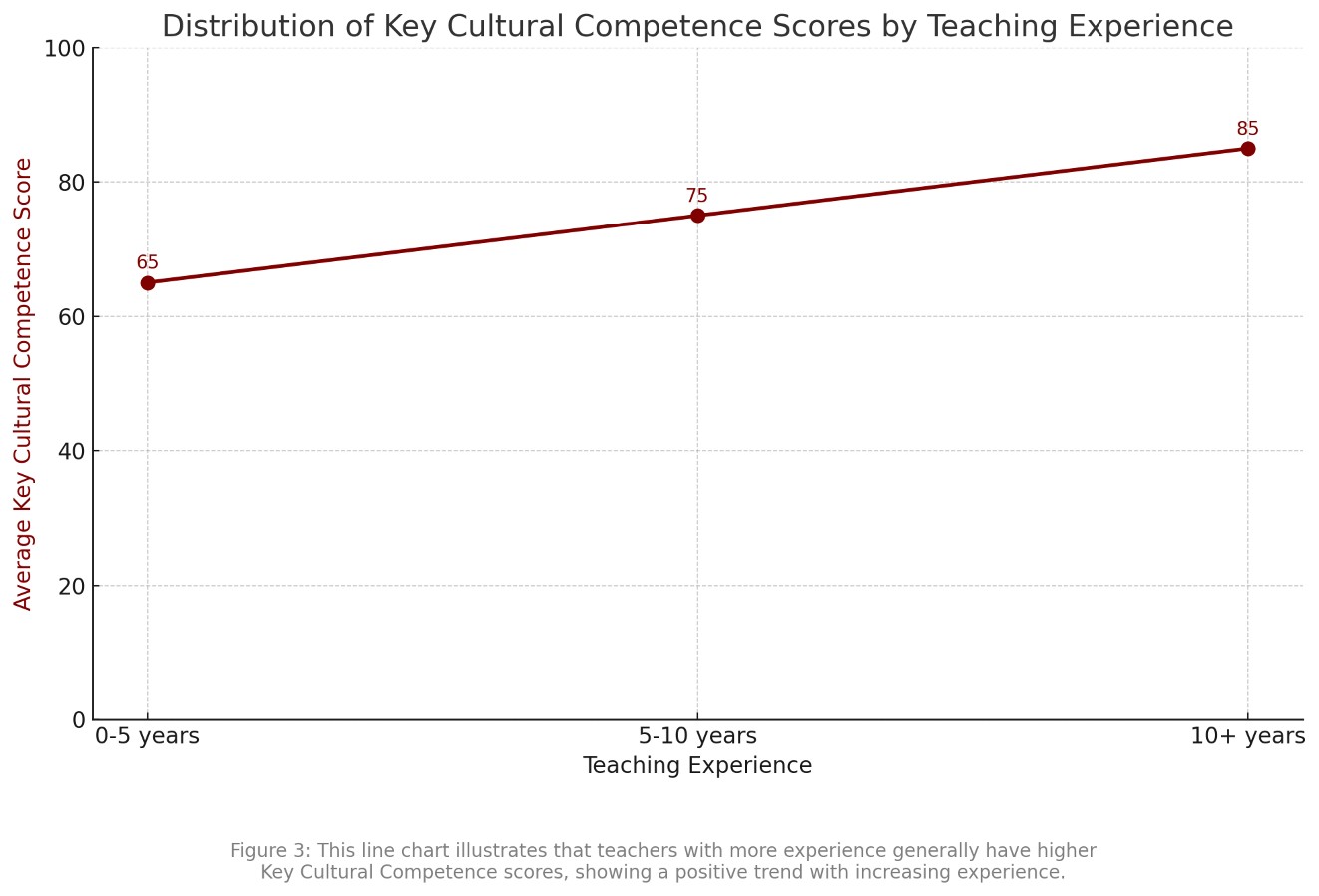
This chart visually represents how the Key Cultural Competence scores vary with different levels of teaching experience, showing a trend that more experienced teachers generally have higher scores in cultural competence. Based on the data we suggest targeted workshops, mentorship, and culturally inclusive resources to help teachers with lower scores improve their cultural competence.
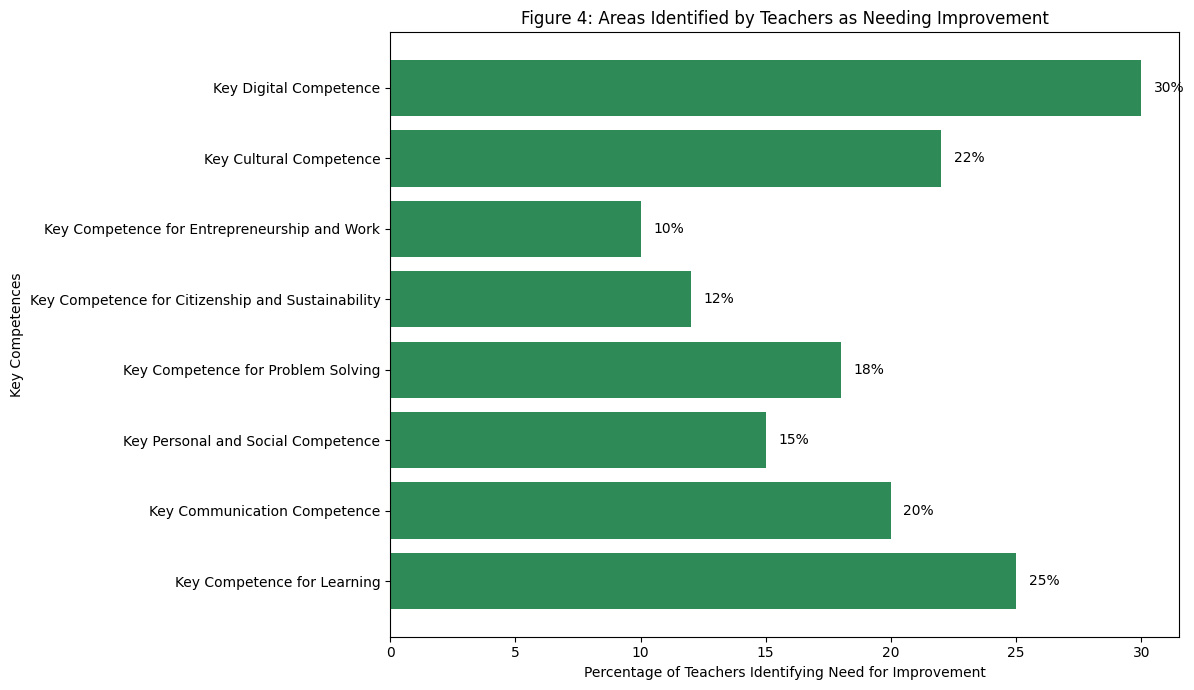
Competence Improvement Areas Figure 4. Areas identified for improvement across the eight competencies
Figure 4 below shows a bar chart of the areas identified by teachers as needing improvement, based on the balancing circle exercise. Note: "Key Digital Competence" and "Key Competence for Entrepreneurship and Work" were most frequently identified as areas needing improvement. "Key Personal and Social Competence" was identified less often, indicating confidence in this area. These findings highlight where professional development initiatives should be focused.
Impact of Professional Development on Competence Levels
Table 3 compares the competence scores of teachers who had recently participated in professional development related to digital and cultural competencies versus those who had not.
Discussion
Implications for Teacher Education and Professional Development
The findings of this study have important implications for teacher education and professional development programs. The variability in competence levels across the eight domains suggests that current teacher training programs may not be adequately preparing teachers for the full range of challenges they will face in the classroom. In particular, the relatively low self-assessments in the areas of digital and cultural competence indicate that these areas may require greater attention in both initial teacher training and ongoing professional development. To address these gaps, teacher training programs must adopt a more holistic and integrated approach to competence development. This could involve incorporating digital literacy and cultural competence into the core curriculum of teacher education programs, as well as providing ongoing professional development opportunities that allow teachers to continually update and expand their skill sets.
Role of the TKCBC Framework in Enhancing Teaching Quality
The TKCBC framework represents a significant advancement in the evaluation of teaching quality. By providing a comprehensive assessment tool that encompasses a wide range of competencies, the framework allows for a more accurate and nuanced evaluation of teachers' strengths and areas for improvement. Moreover, the balancing circle approach used in the TKCBC assessment encourages teachers to reflect on their practice and identify areas where they may need further development. The integration of digital and cultural competencies into the TKCBC framework is particularly noteworthy, as it aligns with the evolving needs of students and the broader educational landscape. In an increasingly digital and globalized world, the ability to effectively use technology and engage with diverse cultures is essential for both teachers and students. By emphasizing these competencies, the TKCBC framework not only helps to improve teaching quality but also supports the development of a more inclusive and adaptive educational environment.
Challenges and Future Directions
While the TKCBC framework offers a promising approach to evaluating teaching quality, its implementation is not without challenges. One of the main challenges is the need for widespread adoption and buy-in from educators, administrators, and policymakers. For the framework to be effective, it must be integrated into existing evaluation systems and supported by ongoing professional development initiatives. Another challenge is the need to continuously update and refine the framework to ensure that it remains relevant in the face of changing educational demands. As technology continues to evolve and cultural dynamics shift, the competencies included in the TKCBC framework may need to be revised or expanded to reflect new developments (Voogt & Pareja Roblin, 2012, pp. 91–93). Future research should focus on testing the TKCBC framework in a variety of educational settings to further validate its effectiveness and identify potential areas for improvement. Additionally, longitudinal studies could provide valuable insights into how teachers' competencies develop over time and how the TKCBC framework can be used to support continuous professional growth.
Conclusion
Summary of Key Findings
This study introduced the Teacher's Key Competence Balance Circle (TKCBC) framework as a comprehensive tool for assessing teaching quality across eight key competencies. The findings highlighted the critical importance of digital and cultural competencies in modern education, as well as the need for a more holistic approach to teacher evaluation that considers the complex and interconnected nature of effective teaching.
Importance of the TKCBC Framework
The TKCBC framework represents a significant step forward in the evaluation of teaching quality, providing a robust and nuanced assessment tool that aligns with the evolving needs of students and the broader educational landscape. By focusing on the development of digital and cultural competencies, the framework supports the creation of a more inclusive and adaptive educational environment, better preparing teachers and students for the challenges of the 21st century.
Final Remarks
As the educational landscape continues to evolve, teacher evaluation systems must keep pace with these changes. The TKCBC framework offers a valuable tool for assessing teaching quality and supporting the continuous professional development of teachers. By emphasizing the integration of digital and cultural competencies, the framework helps to ensure that teachers are equipped to meet the demands of contemporary education and to foster the development of students who are well-prepared for the complexities of the modern world.
Data Availability Statement
Data is available upon request.
Declaration of Conflicts Interests
The authors would like to declare that they have no conflict of interest to disclose.
Ethical Statement
This study was conducted per the ethical principles outlined in the Ethical Code of the University of Hradec Kralove. All participants' data were anonymized to protect their identities, and confidentiality was strictly maintained throughout the study. The study prioritised voluntary participation and a clear understanding of informed consent. Participants were fully informed about the research objectives and assured that their information would be kept confidential. No conflicts of interest were identified, and the study was fully funded by the University of Hradec Kralove, Faculty of Education, which did not influence its design or execution.
References
Arslan, S., & Demirtaş, H. (2021). The role of citizenship education in the context of globalization. Journal of Social Studies Education Research, 12(3), 45-67
Banks, J. A. (2021). Cultural diversity and education: Foundations, curriculum, and teaching (7th ed.). Routledge
Braun, V., & Clarke, V. (2022). Thematic Analysis: A Practical Guide. QMiP Bulletin, 1(33), 46-50. https://doi.org/10.53841/bpsqmip.2022.1.33.46
Chen, Q., & Yang, H. (2021). Digital competence in teaching: A systematic review. Journal of Educational Technology Development and Exchange, 14(2), 233-245
Colley, H. (2021). Communicating effectively in the classroom: Strategies for success. Education 3-13, 49(1), 5-19
Czech School Inspectorate - Evaluation Criteria (2024). Česká školní inspekce – Domů . https://www.csicr.cz/cz/cz/DOKUMENTY/Kriteria-hodnoceni
Doyle, W. (2021). Preparing students for the workforce: The role of entrepreneurship education. Journal of Educational Change, 22(2), 123-140
Ellis, R. A., & Goodyear, P. (2021). Researching learning in higher education: An introduction to contemporary methods and approaches. Routledge
European Commission (2018). The key competence framework: A guide for education and training. Retrieved from. https://europa.eu/
European Commission (2022). Entrepreneurship education: A guide for teachers and educators. Retrieved from. https://ec.europa.eu/
Field, A. (2021). Discovering statistics using IBM SPSS statistics (5th ed.). Sage
Glickman, C. D., Gordon, S. P., & Ross-Gordon, J. M. (2014). The basic guide to supervision and instructional leadership (3rd ed.). Pearson
Hattie, J. (2009). Visible learning: A synthesis of over 800 meta-analyses relating to achievement. Routledge
Kampylis, P. (2021). Digital literacy in education: A comparative analysis. European Journal of Education, 56(4), 563-581
Mahfouz, J. (2021). Emotional intelligence and teacher performance: A review of literature. Journal of Educational Leadership and Policy Studies, 5(1), 78-95
Nieto, S. (2021). Affirming diversity: The sociopolitical context of multicultural education (7th Ed.). Pearson
OECD (2005). Teachers matter: Attracting, developing and retaining effective teachers. OECD Publishing. https://doi.org/10.1787/9789264018044-en
OECD (2021). Teachers' knowledge base: A comprehensive overview. OECD Publishing
OECD (2022). Entrepreneurship education and training: A guide for policy makers. OECD Publishing
Paniagua, A., & Istance, D. (2021). Teachers as designers of learning environments: The importance of innovative pedagogies. OECD Publishing
Redecker, C. (2020). European framework for the digital competence of educators: DigCompEdu. Publications Office of the European Union . Retrieved from. https://publications.europa.eu/
Schleicher, A. (2020). World class: How to build a 21st-century school system. OECD Publishing
Shah, D., & Rahman, Z. (2021). Reflective practice in teaching: The impact on educational quality. International Journal of Educational Research, 105
UNESCO (2021). Global citizenship education: Topics and learning objectives. UNESCO Publishing
Van Driel, J. H., & Berry, A. (2012). Teacher Professional Development Focusing on Pedagogical Content Knowledge. Educational Researcher, 41(1), 26-28. https://doi.org/10.3102/0013189x11431010
Voogt, J., & Pareja Roblin, N. (2012). A comparative analysis of ICT integration in the European Union and Asia-Pacific countries. Journal of Computer Assisted Learning, 28(6), 487-502
Voogt, J., Erstad, O., Dede, C., & Mishra, P. (2013). Challenges to learning and schooling in the digital networked world of the 21st century. Journal of Computer Assisted Learning, 29(5), 403-413. https://doi.org/10.1111/jcal.12029
Winthrop, R., & McGivney, E. (2020). Leapfrogging inequality: Remaking education to help young people thrive. Brookings Institution Press
Zhao, Y. (2020). What works may hurt: Side effects in education. Teachers College Press
Copyright information

This work is licensed under a Creative Commons Attribution-NonCommercial-NoDerivatives 4.0 International License.
About this article
Publication Date
31 December 2024
Article Doi
eBook ISBN
978-625-98059-3-1
Publisher
Emanate Publishing House Ltd.
Volume
1
Print ISBN (optional)
-
Edition Number
1st Edition
Pages
1-79
Subjects
Education, educational psychology, education and technology, education and AI, pedagogy, teacher education
Cite this article as:
El-Hmoudova, D. (2024). Assessing the Quality of Teaching Through the Teacher's Key Competence Balance Circle. In A. Güneyli (Ed.), Proceedings of the 15th International Conference on Education & Educational Psychology (ICEEPSY2024), vol 1. Emanate - Educational Sessions Highlights (pp. 40-53). Emanate Publishing House Ltd.. https://doi.org/10.70020/eesh.2024.12.4